

Everyone struggles with little imperfections. Making crooked teeth straight, stained teeth sparkling white and chipped teeth smooth is part of what I do as an orthodontist. The sense of renewed self confidence that comes to my patients after having some sort of reconstructive work is what makes my job worthwhile.
Consider Katherine Heigl, award winning actress, and considered by many the Grace Kelly of our day. She describes struggling with crooked teeth her whole life until finally there came a point when she said "enough is enough!" She decided to do something to straighten her teeth.
I think you will enjoy this clip. Please feel free to leave comments, tell me what you think! Have you ever struggled with this same problem? Have you felt the relief of smiling to reveal a straight, bright smile after hiding crooked ones for so long? Contact us so we can hear your story, or help you create a new beautiful smile and a story of your own!
Tuesday, January 13, 2009

Tuesday, January 6, 2009
Bad Breath Got You Down? - Olympia WA Orthodontist
 Bad breath can be a real downer, especially when you are out on a date with that girl or boy you’ve had a crush on all semester! However, bad breath can be prevented!
Bad breath, or as your doctor may call it “halitosis,” is caused by odor-producing bacteria that grows in your mouth. This bacteria gathers on bits of food in your mouth and between your teeth and release sulfur compounds making your breath smell. Some foods, like garlic and onions, may contribute more to bad breath because of oils the food the food releases, and smoking is also a major cause of bad breath.
There are several myths around bad breath. Here are some common myths and the truth behind it all:
Myth #1: Mouthwash will make my breath smell better
Mouthwash will make your breath smell better, but it is only a temporary fix. If you use mouthwash, just know that you will still need to brush and floss when you get the chance as mouthwash alone will not kill all of the bacteria producing germs in your mouth. When choosing a mouthwash, pick an antiseptic with plaque-reducing compounds. Also make sure any dental products you choose comes with the American Dental Association’s (ADA) seal of approval!
Myth #2: I brush my teeth; I will never have bad breath
Brushing your teeth will save you from having breath, but the truth is most people only brush their teeth for about 30-45 seconds! You need to brush your teeth for at least 2 minutes, twice a day to give your teeth a thorough cleansing. It’s also important to brush your tongue, which is where a majority of odor causing bacteria like to hang out. Lastly, flossing to remove food and plaque between the teeth will also help reduce your chances of having bad breath!
Myth #3: If I don’t smell it, then my breath is fresh
This is a false assumption in every sense of the word! The truth is that the breath you breathe out is not the same breath coming out when you talk to someone. When you breathe you are not using your throat as you do when you are talking; and when you talk more breath moves over the back of your mouth where bacteria is causing bad breath.
#1 TRUTH: Brush your teeth twice a day (for at least 2 minutes), floss at least once and visit your dentist every six months…this way your breath will always be fresh! Not letting your nerves get the best of you on your date? That’s up to you!!!
Tuesday, December 30, 2008
Understanding Cavities - Dr. Zach Ehrmantrout
 One word nobody wants to hear when they visit their dentist is Cavity! That’s right, the dreaded cavity; but what exactly is a cavity and how do they happen? A cavity is a hole that develops in a tooth when the tooth begins to decay. It’s important to get a cavity filled as soon as it’s detected so that it does not grow bigger.
 So, what causes a cavity? A cavity is caused by plaque, a sticky substance that forms on the tooth as a result of germ and bacteria build-up. Plaque is acidic and as it clings to your teeth the acids eat away the outside of the tooth (also called the enamel) and a hole is formed.
Yes, cavities can be repaired by your dentist, but here are a few simple steps you can take to prevent cavities:
• Brush your teeth with fluoride toothpaste at least twice daily
• Gently brush your gums to keep them healthy (when choosing a toothbrush it is recommended to use soft bristles)
• Floss your teeth at least once a day to remove plaque and food that may be caught between your teeth and braces where your toothbrush can’t reach
• Limit the amount of soda and sugary treats you eat/drink
• Be sure to visit your dentist every six months for a teeth cleaning and check-up in addition to your orthodontic appointments
Tuesday, December 23, 2008
Now That I Have Braces, What Can I Eat? - Hawks Prairie Orthodontics
 You just got braces and the orthodontist has informed you that over the next several months you will want to avoid eating anything sticky, hard, crunchy, or chewy. What does this leave for you to eat? Lettuce? Nothing?
Luckily, there was someone else wondering the same thing when she first got braces! Brenda Waterman, 13, decided she was going to find a way to have her cake and eat it too, so she created a variety of “braces-friendly” recipes that allow you to enjoy your favorite treats without interfering with your orthodontic care! Her cookbook, “The Braces Cookbook: Recipes you (and your Orthodontist) will Love,” gives patients a variety of delicious recipes, safe to eat with braces; plus additional tips and advice for packing lunches, what to eat at parties, and braces-friendly restaurant dishes! There’s even a section with tips for dealing with the soreness that can occur when your braces or appliance are adjusted. Enjoy the foods you love – even with braces!
Here is a delicious, sneak peek recipe from “The Braces Cookbook:”
Wonderful Waffles
Forget the recipe that came with your waffle iron – this recipe will redefine fluffy, melt-in-your-mouth goodness. The secret to delicious waffles is letting the batter "sit" for five minutes before pouring into the waffle iron. Top cooked waffles with syrup, jam, fresh fruit or even whip cream. Makes about 5 servings!
Preheat your waffle iron according to the directions. You may want to lightly spray it with vegetable oil before heating.
• 3 cups flour
• 2 Tbl + 2 tsp baking powder
• 1 tsp salt
• 2 Tbl sugar
• 4 cups milk
• 4 eggs
• 1/2 cup vegetable oil
In a large bowl, whisk (or use electric mixer on low) together all ingredients. Let batter sit for about five minutes to activate the baking powder.
When waffle iron is ready, pour about 1/3 cup of batter onto each of the four squares (experiment with your iron – you don't want the batter overflowing). Gently close the cover and set your timer as the manufacturer suggests. Do not lift the cover while they bake. When done, carefully lift one edge with a flat spatula and pull the waffle away from the iron. Keep waffles warm on a plate under a clean dishtowel while the others bake.
Tuesday, December 16, 2008
When Is Thumb-Sucking a Cause for Worry? - Dr. Zach Ehrmantrout
 Lots of you have asked us about whether it’s healthy for children to suck thumbs (or, less frequently, fingers). If you’ve got a thumb-sucker in the house, you are not alone. Research tells us that between 75% and 95% of infants suck their thumbs. Is this anything to worry about?
 In most cases, no. Sucking is a natural reflex for an infant, and can provide security and contentment as well as relaxation for your little one. It’s a habit that most children grow out of between the ages of 2 and 4.
However, if your child keeps sucking after he’s gotten his permanent teeth, it’s time to take a closer look. If your child sucks his thumb aggressively, putting pressure on the inside of his mouth or his teeth, it could cause problems with tooth alignment and proper mouth growth. If you’re worried, give us a call at 360-491-4884 and we can help assess the situation, and provide tips for how to help your child break the habit.
Tuesday, December 9, 2008
Regular Checkups Are important!
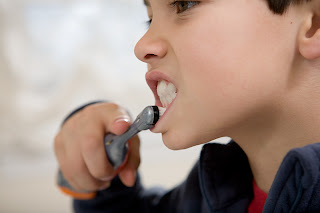 Are you brushing your teeth twice a day? If yes, that’s great; but, don’t forget that it’s also important to visit the dentist every six months in addition to your orthodontic visits. Regular dental checkups are important for maintaining good oral health. Your dentist can:
• Check for problems that might not be seen or felt
• Detect cavities and early signs of decay
• Treat oral health problems early
• Show you how to properly brush and floss your teeth
During an oral exam the doctor will check the health of your mouth, teeth, gums, cheeks and tongue. Checkups will also include a thorough teeth cleaning and polishing. If you have not been to the dentist in the last six months, it’s time for you to schedule an appointment!
Tuesday, December 2, 2008
Are There Teeth Grinders in Your House?
 Grind, grind, grind, grind. If you live with a teeth grinder, especially a night grinder, you may be familiar with this unpleasant sound. Other symptoms of teeth grinding (technically called “bruxism”) include:
 • Sensitivity in the teeth
• Tightness or pain in the jaw
• Dull headaches, earaches, or facial pain
• Chipped, worn down, or loose teeth
People frequently grind their teeth in response to stress, so taking measures to reduce or eliminate stress can help solve the problem. Here are some things you can try to stop grinding:
• Cut back on caffeine and alcohol
• Drink plenty of water to avoid dehydration
• Relax right before bedtime with a warm bath or shower
• Help your jaw learn to relax by quitting any chewing habits (pens, pencils, gum)
• When clenching or grinding happens during the day, place your tongue between your teeth to serve as a reminder to avoid the habit
If grinding goes untreated, it can lead to chipped teeth, worn enamel, chronic pain, or even TMJ, a painful jaw disorder. If the teeth-grinder in your house can’t stop, make an appointment to see us by calling 360-491-4884. Dr. Ehrmantrout can help determine the cause of the problem and possibly even prescribe a custom mouthpiece to help break the habit.
Subscribe to:
Posts (Atom)


